Foreign Transaction Fees Explained (2026): The 3% Card Fee, Pay in USD or Local Currency (DCC), and ATM Fees Abroad
What a foreign transaction fee is, which US cards charge 3% or nothing according to issuer terms, why online orders from foreign merchants can trigger it, plus DCC and ATM fees abroad.
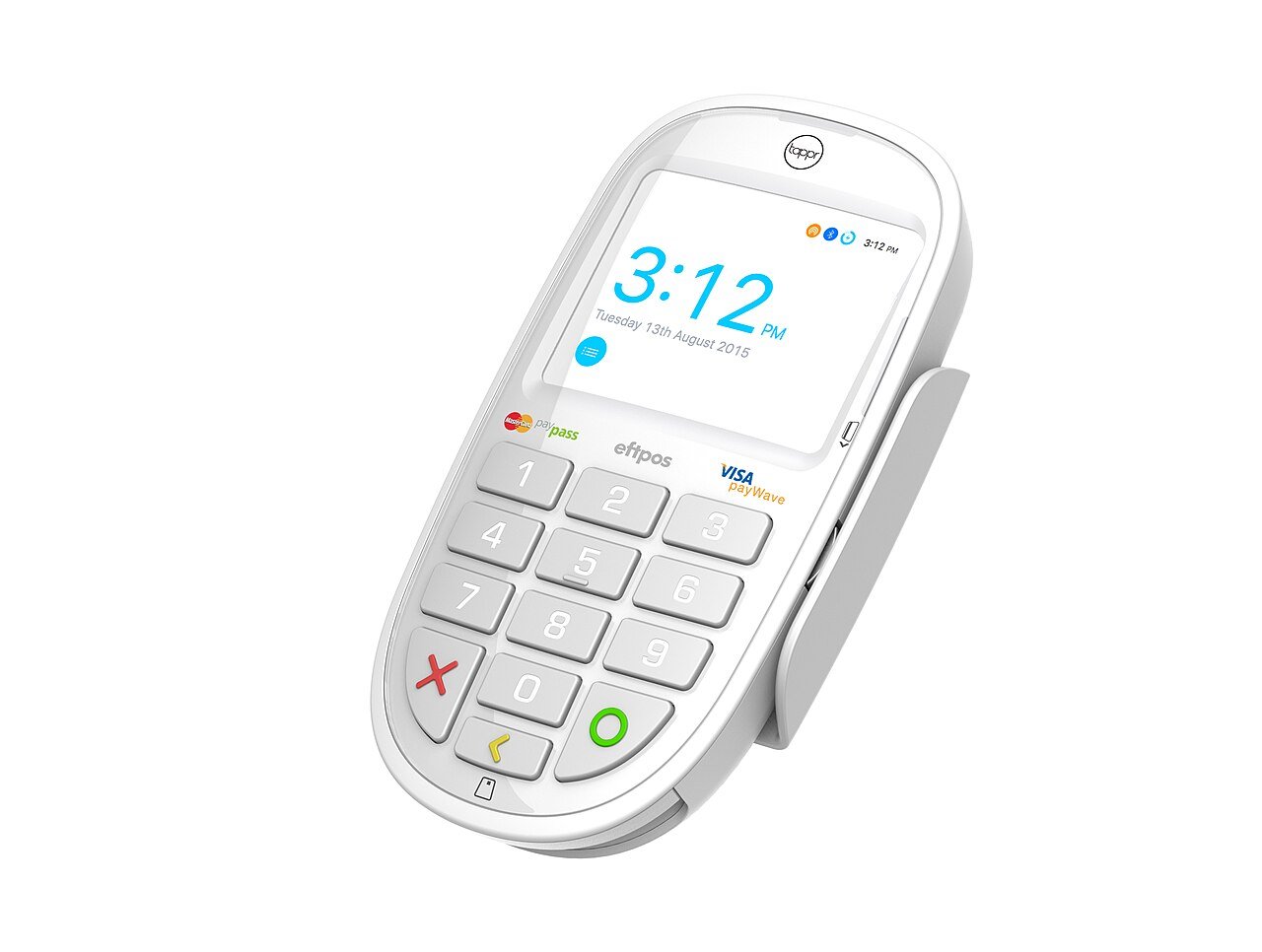
A trip abroad over the holidays, or a winter jacket ordered from a shop in Canada or the UK, can leave a line on your statement you did not expect: a foreign transaction fee. It is often a round 3% of the purchase, and it is easy to miss because it sits next to the charge rather than inside the price you saw at checkout.
The fee is only one of several costs that can show up when a US-issued card meets a foreign merchant. A card terminal or ATM may offer to charge you in US dollars instead of the local currency (dynamic currency conversion, or DCC), and an ATM withdrawal abroad can carry both your bank's fee and the machine owner's fee.
This guide explains each cost from official sources only: the Consumer Financial Protection Bureau's Regulation Z text, Visa's DCC page, and the published pricing terms of several large US issuers, all checked on November 11, 2026. It is general information about how these fees work, not a recommendation to open or use any card.
At a glance
| Cost | Who charges it | What official pages state | Can you avoid it? |
|---|---|---|---|
| Foreign transaction fee | Your card issuer | "Typically 1%-3%" (Capital One); 3% on several cards below; none on others | Yes, with a card whose terms list no fee |
| Dynamic currency conversion (DCC) | The merchant or ATM operator offering the conversion | Exchange rate plus added fees shown on screen (Visa); "3% to 12%" (Capital One) | Usually: choose the local currency |
| Bank fee at a foreign ATM (debit) | Your bank | Chase Total Checking: $5 per withdrawal at a non-Chase ATM outside the US | Depends on your account |
| ATM owner surcharge | The ATM owner or network | Not set by your bank; "still apply" (Chase) | Sometimes, by choosing the machine |
| Cash advance fees (credit card at an ATM) | Your card issuer | Chase Freedom Unlimited: $10 or 5%, whichever is greater | Yes, by not using a credit card for cash |
Basis: US-issued consumer cards, fees as written on each issuer's or organization's official page on November 11, 2026. Fees can differ by card product and change over time, so the pricing table in your own cardholder agreement is the final word.
How we checked and what is not covered
All figures come from these official pages:
- Regulation: the CFPB's Regulation Z § 1026.60 and its official interpretation, which govern how card issuers disclose fees in the application table.
- Issuers: pricing and terms pages for Chase Freedom Unlimited, Citi's featured cards, Wells Fargo Active Cash, Bank of America Travel Rewards and Capital One's fee explainer.
- Card network: Visa's dynamic currency conversion page.
Not covered here:
- American Express and Discover figures. American Express pages returned an error to automated access, and the Discover article available on November 11, 2026 did not state Discover's own fee in the visible text. We therefore do not quote either issuer's rate.
- Exchange rates. The rate used to convert a foreign price into dollars is separate from the fees and changes over time. This article does not quote any rate; the calculations below use fees only.
- Rewards, annual fees and credit requirements. These vary too much by product to compare fairly here.
What a foreign transaction fee is
A foreign transaction fee is a charge your card issuer adds when a purchase involves a foreign currency or a foreign merchant. Capital One defines it as "a surcharge for a purchase made with a credit card outside the U.S. or from a non-U.S. company" and says it is "typically 1%-3% of the transaction amount."
The federal rule that governs how this fee is disclosed is broader than many people expect. The CFPB's official interpretation of Regulation Z (comment 60(b)(4)-2) says the transaction charge for purchases "includes any fee imposed by the issuer for purchases in a foreign currency or that take place outside the United States or with a foreign merchant." In other words, the regulation's description covers three different situations:
| Situation | Example | Covered by the Regulation Z description? |
|---|---|---|
| Purchase in a foreign currency | Paying in euros at a café in Rome | Yes |
| Purchase that takes place outside the US | Paying at a shop in Toronto | Yes |
| Purchase with a foreign merchant | Ordering online from a shop based abroad | Yes |
That is why the fee can appear even if you never leave home. Capital One's page uses this example: buying a bag online from a French boutique, where "you may be charged a foreign transaction fee if you buy it online without ever leaving your couch."
Whether your issuer charges the fee on a purchase priced in US dollars by a foreign merchant depends on the exact wording of your cardholder agreement. The issuer pages we checked word the fee differently (see the next section). If a foreign online store shows prices in USD, the safest reading is that a fee may still apply unless your card lists no foreign transaction fee at all.
What major US issuers state
| Card (issuer) | Foreign transaction fee, as written | Where it is stated |
|---|---|---|
| Chase Freedom Unlimited | "3% of the amount of each transaction in U.S. dollars" | Pricing & Terms, accurate as of September 22, 2026 |
| Citi Double Cash | "3% of the U.S. dollar amount of each purchase" | Citi pricing information |
| Citi Custom Cash | "3% of each purchase transaction in US dollars" | Citi pricing information |
| Costco Anywhere Visa by Citi | "None" | Citi pricing information |
| Wells Fargo Active Cash | "3% of each transaction converted to U.S. dollars" | Rates and fees, correct as of September 2026 |
| Bank of America Travel Rewards | "No foreign transaction fees" | Product page |
| Capital One (all US-issued credit cards) | "Doesn't charge foreign transaction fees for any of its U.S.-issued credit cards" | Capital One explainer |
Checked November 11, 2026 on each issuer's official page. Fees apply to the named product only; another card from the same bank can have different terms.
- Capital One cards (no fee)0 USD
- BofA Travel Rewards (no fee)0 USD
- Costco Anywhere Visa by Citi (none)0 USD
- Chase Freedom Unlimited (3%)15 USD
- Citi Double Cash (3%)15 USD
- Wells Fargo Active Cash (3%)15 USD
- DCC markup at 3% (low end)15 USD
- DCC markup at 12% (high end)60 USD
Two patterns stand out. First, the 3% fee and the "no fee" option often coexist at the same bank: Citi lists 3% on Double Cash and Custom Cash but "None" on the Costco Anywhere Visa, and Bank of America markets its Travel Rewards card with no foreign transaction fees. The fee is a feature of the card, not of the bank.
Second, the wording differs. Chase's text describes 3% "of each transaction in U.S. dollars," while Wells Fargo's describes 3% "of each transaction converted to U.S. dollars." These phrases describe how the fee is calculated, but they are not definitions of which transactions count as foreign. For that, look at the definitions section of your cardholder agreement.
What 3% means in dollars
The calculation is simple: the fee is a percentage of the US-dollar amount of the purchase.
| Purchase amount (in USD) | Fee at 3% | Fee on a no-fee card |
|---|---|---|
| 100 USD | 3.00 USD | 0 USD |
| 500 USD | 15.00 USD | 0 USD |
| 2,000 USD (a week of hotels and meals) | 60.00 USD | 0 USD |
Example: 500 × 3% = 15 USD. The exchange rate used to turn euros or pounds into dollars is a separate matter; this example assumes the purchase is already expressed in USD.
Dynamic currency conversion: "Pay in USD or local currency?"
Dynamic currency conversion (DCC) is when a merchant or ATM abroad offers to charge your card in US dollars instead of the local currency. It looks helpful, because you see a dollar amount right away. But the merchant's side then chooses the exchange rate and can add its own fees.
According to Visa's DCC page:
| Rule or advice | What Visa says |
|---|---|
| What must be shown | Merchants and ATMs must clearly display the amounts in both currencies, the exchange rate and any added fees or markup, on screen and on the receipt |
| Your choice | Merchants and ATMs "should give you a choice to accept or decline currency conversion and must not choose on your behalf" |
| No pressure | They should not use font size or color to push you toward one option; accepting or declining does not affect your ability to pay or withdraw cash |
| If something is wrong | If details are missing or you feel pressured, "Visa recommends that you decline the currency conversion offer and report the incident to your card issuer" |
| ATMs | You might withdraw local currency and "be billed in your home currency" — the same rules apply |
How large is the cost? Capital One's explainer on its fees says dynamic conversion fees "may range from 3% to 12% of the purchase amount." On a 500 USD purchase that range is 15 to 60 USD, which can be larger than a 3% foreign transaction fee.
Note that choosing USD at the terminal does not necessarily cancel your issuer's foreign transaction fee, because the purchase still takes place outside the US or with a foreign merchant. Check your card terms; on a card that charges a fee, DCC can mean paying both.
ATMs abroad: up to three separate costs
Taking cash out abroad can involve several parties, and each one may charge.
| Cost | Example from official pages | Notes |
|---|---|---|
| Your bank's fee for a foreign ATM (debit card) | Chase Total Checking: "$5 per withdrawal at a non-Chase ATM outside the U.S. and the U.S. territories" | Chase also says a Foreign Exchange Rate Adjustment Fee "may apply" to withdrawals in another currency; the percentage is not stated on that page |
| ATM owner surcharge | Chase: "Surcharge Fees from the ATM owner/network still apply" | Capital One also says you "may be charged a fee by the operator if you use an out-of-network ATM" |
| Cash advance on a credit card | Chase Freedom Unlimited: "Either $10 or 5% of the amount of each transaction, whichever is greater" | Interest on cash advances usually starts right away; see your card's APR table |
Capital One says it "doesn't charge additional fees for foreign debit card transactions," but notes that some accounts may have international ATM fees and that ATM operators can still charge.
Example (Chase Total Checking, debit card): withdrawing the local equivalent of 200 USD once costs the 5 USD Chase fee, plus any foreign exchange adjustment and the ATM owner's fee. Withdrawing the same amount in four trips costs 4 × 5 = 20 USD in Chase fees alone. Fewer, larger withdrawals reduce the fixed per-withdrawal cost.
Example (credit card cash advance): under Chase Freedom Unlimited's terms, a 200 USD cash advance costs the greater of 10 USD or 5% of 200 USD (also 10 USD), so 10 USD, before any cash advance interest.
Which situation applies to you?
- Traveling abroad with one card: look up the "Foreign Transactions" line in your card's pricing table before you leave. If it says 3%, every purchase on the trip carries it.
- Buying online from a store based outside the US: the Regulation Z description includes purchases "with a foreign merchant," so a fee may apply even with USD pricing, depending on your card terms. Your statement usually shows the fee as a separate line.
- Booking hotels or tours abroad online: hotels and booking sites sometimes offer to charge in USD. That is DCC; the local currency avoids the merchant's conversion markup.
- Needing cash: use a debit card rather than a credit card to avoid cash advance fees, and check your bank's foreign ATM fee per withdrawal.
How to keep the costs down
- Read one line of your pricing table. The "Foreign Transactions" row tells you whether it is 3% or none. It is the only reliable source for your specific card.
- Choose the local currency when a terminal, ATM or booking page offers you USD. Visa says you can decline without affecting the payment.
- Watch for USD-priced foreign websites. A dollar price does not guarantee that the merchant is in the US.
- Limit ATM visits. Fixed per-withdrawal fees, such as 5 USD at Chase, add up with each trip to the machine.
- Keep receipts. If a merchant converted your purchase without asking, Visa says to report it to your card issuer.
Related reading
- Wise vs Payoneer vs PayPal fees for receiving USD
- How to pay in Japan in 2026
- US import duties on online orders in 2026
- Holiday shipping deadlines 2026
- AdSense Payment Guide (2026): When AdSense Pays, Thresholds by Currency, PIN, W-8BEN and Payment Methods by Country
- Fed, BOJ & Bank of Korea Meeting Schedule 2026–2027
- Stablecoin Regulation 2026: US GENIUS Act vs Japan, South Korea and EU MiCA Compared
FAQ
How much is a foreign transaction fee on a US credit card?
It depends on the card. Capital One describes the fee as typically 1% to 3% of the transaction. On issuer pricing pages checked on November 11, 2026, Chase Freedom Unlimited, Citi Double Cash and Wells Fargo Active Cash list 3%, while Capital One says none of its US-issued credit cards charge one and Bank of America's Travel Rewards card lists no foreign transaction fees.
Can I be charged a foreign transaction fee when I shop online from the US?
Yes, depending on your card's terms. The CFPB's official interpretation of Regulation Z describes foreign transaction fees as fees for purchases in a foreign currency, purchases that take place outside the United States, or purchases with a foreign merchant, and Capital One gives the example of buying from a French boutique online without leaving your couch. Your cardholder agreement defines exactly which transactions count.
Should I pay in USD or in local currency when a card terminal abroad asks?
Visa explains that choosing your home currency means the merchant or ATM does the conversion (dynamic currency conversion) and the price includes its exchange rate and added fees. Capital One says DCC fees may range from 3% to 12%. Visa says you can decline the conversion, and it recommends declining and reporting to your issuer if the required details are missing or you feel pressured.
Related articles
-
 Fintech & Web3 · Cross-Border Payments
AdSense Payment Guide (2026): When AdSense Pays, Thresholds by Currency, PIN, W-8BEN and Payment Methods by Country
When does AdSense pay? Google's official monthly schedule (finalized by the 3rd, paid the 21st to 26th), payment thresholds for USD, GBP, EUR, CAD, AUD and more, PIN and identity checks, W-9 vs W-8BEN, payment methods by country and common holds.
-
 Fintech & Web3 · Cross-Border Payments
Wise vs Payoneer vs PayPal Fees for Receiving USD (2026): A Guide for Freelancers Outside the US
What it costs a freelancer outside the US to receive USD from American clients: Wise and Payoneer receiving, conversion and withdrawal fees from official pricing pages, a worked 1,000 USD example, and why PayPal figures are omitted.
-
 Fintech & Web3 · Cross-Border Payments
How to Pay in Japan in 2026: Cash, Cards, Suica, ATMs and the New Tax-Free Refund System
A visitor's guide to paying in Japan: card acceptance, foreign-card ATMs at Seven Bank and Japan Post Bank, Suica/PASMO/ICOCA deposits, and the tax-free refund method that started November 1, 2026.
-
 Fintech & Web3 · Tech Stocks & Macro
Fed, BOJ & Bank of Korea Meeting Schedule 2026–2027 (FOMC Dates in ET and UTC)
Remaining 2026 and full 2027 meeting dates for the FOMC, Bank of Japan and Bank of Korea, with release times converted to US Eastern and UTC, projection meetings marked and current policy rates, from official calendars.