US Import Duties on Online Orders in 2026: The $800 De Minimis Is Suspended. What Shoppers Pay Now
What US shoppers pay on international online orders now that the $800 de minimis exemption is suspended: CBP and Federal Register rules for postal vs express shipments, the $100 gift and traveler exemptions, and worked duty examples using official HTSUS rates.
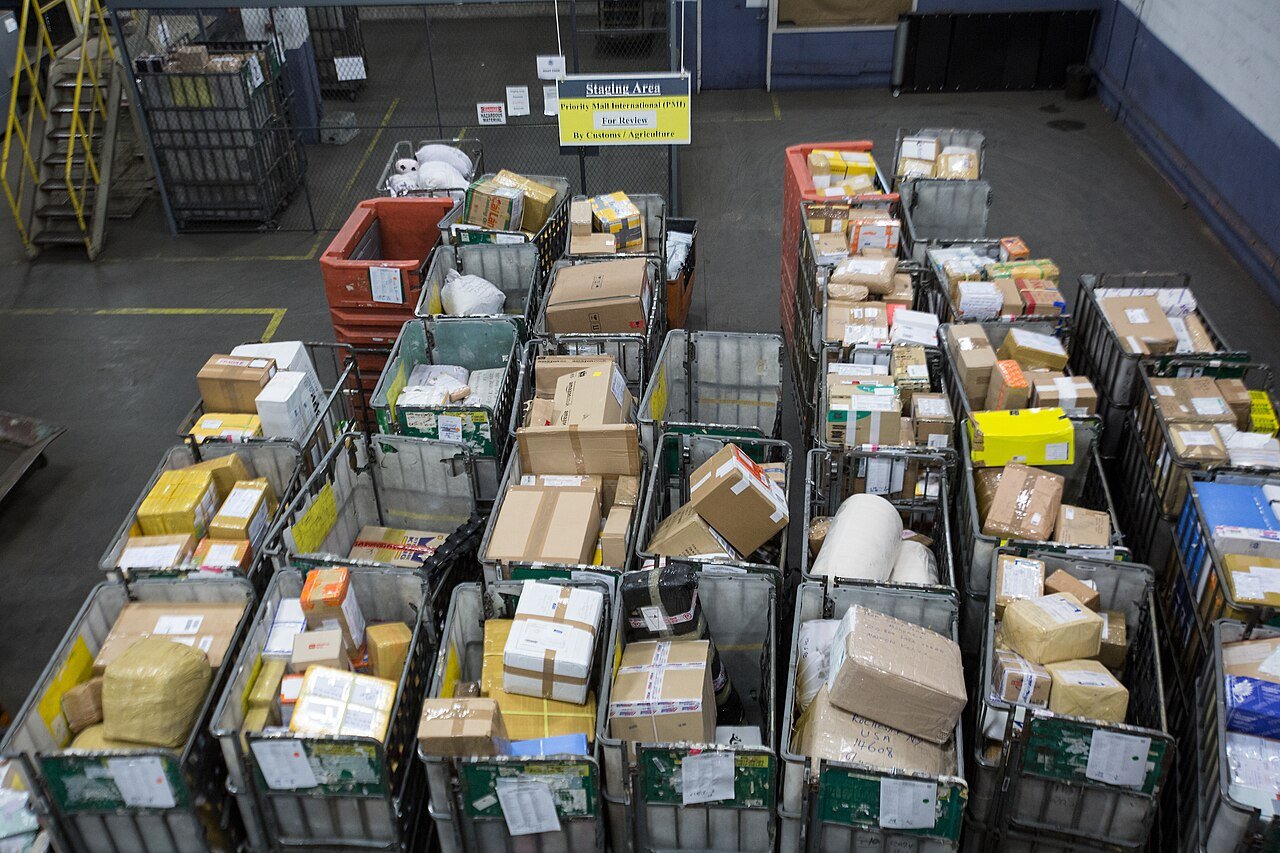
For most of the last decade, an American shopper could order a $50 jacket from an overseas store and never think about customs. Shipments worth $800 or less came in duty-free under what the trade world calls the de minimis exemption. That is no longer how it works. If you buy from a store abroad today, almost any package can carry a duty bill, whether it comes by courier or through the mail.
This guide explains where the rule stands on November 10, 2026, using only US Customs and Border Protection (CBP) pages, the Federal Register and the official Harmonized Tariff Schedule (HTSUS). It covers what changed, how the duty reaches you for courier and postal packages, which small exemptions survive, and how to estimate the duty on an order yourself. It is general information, not customs advice for a specific shipment.
At a glance
| Item | Rule in effect (checked November 10, 2026) | Official source |
|---|---|---|
| $800 de minimis exemption | Suspended for all countries and all modes, including mail | CBP E-Commerce FAQ; 91 FR 37789 and 91 FR 37801 |
| Suspension history | In effect "since at least August 29, 2025" (E.O. 14324), continued by E.O. 14388 (Feb. 20, 2026), made indefinite in CBP regulations June 24, 2026 | Federal Register 2026-12670, 2026-20650 |
| Statutory end of de minimis | Terminated effective July 1, 2027 (One Big Beautiful Bill Act, Pub. L. 119-21, sec. 70531(b)) | Federal Register 2026-20650 |
| Bona fide gifts | Still duty-free up to $100 ($200 from certain island possessions) | 91 FR 37789 |
| Articles accompanying travelers | Still duty-free up to $200 under 19 U.S.C. 1321(a)(2)(B) | 91 FR 37789 |
| Informal entry | Generally allowed for shipments of $2,500 or less | CBP E-Commerce FAQ |
| Duty rate | Set by HTSUS classification and the rates in effect when the entry is made | CBP E-Commerce FAQ |
Basis: personal online purchases shipped from abroad to a US address. Dollar figures are customs values in US dollars. Checked November 10, 2026.
- Bona fide gift (still duty-free)100 USD
- Traveler's accompanying articles (still duty-free)200 USD
- Former de minimis (suspended)800 USD
- Informal entry upper limit2,500 USD
What we checked, and what we left out
We read the two interim final rules CBP published on June 24, 2026: one for all modes other than mail and one for international mail. We also read the October 22, 2026 compliance-date extension, the October 8, 2026 Low-Value Shipments proposed rule, CBP's E-Commerce FAQ (last modified November 6, 2026) and its consumer pages. Duty rates come from the USITC's HTSUS search, 2026 Revision 22.
We did not cover:
- Additional duties under Chapter 99 of the HTSUS, such as Section 301 duties on certain products of China. Whether they apply depends on the exact product and origin, so we did not assign them to any example.
- Carrier brokerage or handling fees. CBP pages do not list them, and the UPS customs page returned an access-denied response to our automated check, so we quote no carrier fee amounts.
- State sales tax on foreign purchases, which is a state matter, not a CBP one.
What changed: the $800 exemption is suspended
Section 321 of the Tariff Act let CBP waive duty on shipments to one person on one day worth $800 or less. The Federal Register rule explains why that exemption became a problem in CBP's view: CBP processed "over 1.36 billion de minimis shipments" in fiscal year 2024, "an almost ten-fold increase" over 139 million in 2015.
The exemption has been switched off in stages:
| Date | Action | What it did |
|---|---|---|
| July 4, 2025 | One Big Beautiful Bill Act enacted | Terminates the de minimis exemption effective July 1, 2027 |
| July 30, 2025 | Executive Order 14324 | Suspended duty-free de minimis treatment for all countries; CBP says the suspension has applied since at least August 29, 2025 |
| February 20, 2026 | Executive Order 14388 | Continued the suspension |
| June 24, 2026 | Two CBP interim final rules | Indefinite suspension written into CBP regulations, for mail and all other modes |
| July 24, 2026 | Postal rule takes effect | New postal informal entry process starts |
| January 20, 2027 | Delayed compliance date | Formal entry required for certain mail shipments (see below) |
CBP's FAQ answers the question most shoppers ask directly: yes, the suspension applies to "merchandise valued at $800 or less arriving via all modes, including the international postal network." It does not depend on which country the seller is in.
One caution: CBP's older Internet Purchases page, last modified March 6, 2024, still says packages declared under $800 generally clear without extra paperwork. That sentence predates the suspension. The Federal Register rules and the November 2026 FAQ control.
Courier and express shipments: the carrier collects from you
For packages that arrive by express carrier or courier, the non-postal rule says the "release from manifest" process is no longer available for formerly de minimis shipments, and CBP has also suspended the Entry Type 86 test. That leaves "Entry Type 11 as the main appropriate informal entry method," with formal entry as an option. Someone qualified to make entry has to file it and pay the duty.
What that means at your door is described on CBP's Internet Purchases page. If a courier handles clearance, "that service will either bill you for the duty they paid on your behalf or require payment on delivery." If you hire your own customs broker, the broker bills you for its services and any duty it paid. CBP is blunt about who owes the money: it "holds the importer - YOU - liable for the payment of duty not the seller." It also warns that "a purchase price that includes shipping and handling does not include duty."
Some sellers do collect duties at checkout and arrange clearance themselves. If the checkout shows duties as paid, the carrier should not bill you again for the duty. If it does not, plan for a bill from the carrier.
International mail: no more paying at the post office
Mail used to work differently. Under the old process, CBP officers prepared a mail entry and you usually paid the duty at your local post office. The postal rule ends that. CBP officers "will no longer manually prepare entry forms" for these shipments, "and duties will not be collected upon delivery of such shipments to addressees."
Instead, a filer submits a spreadsheet with the value, 10-digit HTSUS classification, country of origin, duty rate and total duty owed. Payment goes to CBP via Pay.gov "no later than the 7th day of the month following arrival." Only a party with the right to make entry can file: "an owner or purchaser of the merchandise," or a licensed customs broker designated by the owner, purchaser or consignee. The filer also needs a customs bond.
Who ends up paying? The rule says "it is the filers who pay the duties in the postal informal entry process," but those duties "can be passed on to other parties to the transaction such as the importer or the supplier." Under the interim process that ran before July 24, 2026, CBP describes the foreign post office collecting the information and duties from the shipper and passing them to a qualified third party that paid CBP. In practice, the cost of duty on a mailed parcel tends to reach you through the seller's price or checkout rather than at your mailbox.
If the paperwork is missing, the package waits. CBP's FAQ says a shipment that arrives without the required data or bond "will not be released from CBP custody until all requirements are satisfied."
Two more postal details from official sources:
- Fees: The FAQ says mail shipments are exempt from the merchandise processing fee, except items sent by Inbound Express Mail service (Inbound EMS).
- Formal entry for some mail: Mail that is subject to another agency's requirements, or to duties under Chapter 98 or 99, or that claims duty-free treatment under Chapter 98 or a free trade agreement, must use formal entry. CBP extended the compliance date for that requirement from October 22, 2026 to January 20, 2027. The FAQ still shows October 22, 2026 in one answer, so rely on the later Federal Register notice.
A further change is proposed, not final. The October 8, 2026 Low-Value Shipments proposed rule would create a new electronic informal entry type for mail and add bonding rules for some informal entries. Comments close December 7, 2026.
Exemptions that still exist
The suspension covers the $800 de minimis rule only. Two other exemptions in the same statute survive, and both rules say their requirements "remain unchanged."
| Exemption | Limit | Who it helps |
|---|---|---|
| Bona fide gift, 19 U.S.C. 1321(a)(2)(A) | $100 or less ($200 from certain island possessions) | Someone abroad sends you a genuine gift |
| Personal or household articles accompanying a traveler, 19 U.S.C. 1321(a)(2)(B) | $200 or less | Goods you carry in your luggage when you arrive |
| Returning resident personal exemption (separate CBP traveler rule) | $200, $800 or $1,600 depending on the countries visited | US residents bringing purchases home in person |
The gift rule is narrower than many people assume. CBP's FAQ defines a bona fide gift as an article "formerly owned by a donor" given "without compensation or promise of compensation." It does not include anything acquired by purchase, nor "articles said to be 'given' in conjunction with a purchase," such as a bonus item. An order you place yourself, even one marked "gift" on the customs form, does not qualify.
For travelers, CBP's What to Expect When You Return page says items must be for personal or household use or gifts, in your possession, declared, and you generally must have been abroad at least 48 hours and not used the exemption in the past 30 days. It also says items sent to you later "may not be included in your duty-free exemption." Buying something on a trip and having the store ship it home generally puts it back in the ordinary duty rules.
How to estimate the duty on an order
CBP's FAQ says duty rates "are based on the HTSUS classification and the rates in effect at the time the entry is made." The basic calculation is:
Duty = dutiable value × HTSUS rate, plus any Chapter 99 additional duty that applies to the product and its country of origin.
To find the rate, search the product on hts.usitc.gov and read the "General" column (column 1). The "Special" column lists free trade agreement rates, which apply only if the filer claims them; for example, these lines show "Free" for KR (Korea). Then check whether the product falls under a Chapter 99 heading. For example, heading 9903.88.03 reads "The duty provided in the applicable subheading + 25%" for listed products of China.
Three worked examples
Assumptions: the goods are not from China, no Chapter 99 duty applies, no free trade agreement rate is claimed, and the dutiable value equals the item price. Carrier and broker fees are not included.
| Example | HTSUS line (2026 Rev. 22) | General rate | Calculation | Duty |
|---|---|---|---|---|
| Men's cotton knit T-shirt, $40 | 6109.10.00 (T-shirts, knitted, of cotton) | 16.5% | 40 × 0.165 | $6.60 |
| Backpack with outer surface of man-made fiber textile, $120 | 4202.92.31 (statistical suffix .20, backpacks) | 17.6% | 120 × 0.176 | $21.12 |
| Wireless earbuds, $60 | 8518.30.20 (headphones and earphones, other) | Free | 60 × 0 | $0.00 |
- Cotton T-shirt, 40 USD6.6 USD
- Synthetic-fabric backpack, 120 USD21.12 USD
- Wireless earbuds, 60 USD0 USD
Three things stand out. First, rates vary widely by product: apparel and textile bags carry high general rates, while many electronics lines are free at the general rate. Second, a zero general rate does not mean a free package. An additional duty, or a courier's fee for clearing the shipment, can still apply. Third, the final classification belongs to the filer and CBP, not the shopper; the examples show the method, not a ruling for any specific product.
Practical checklist before you order from abroad
- Look for "duties included" or a duty line at checkout. If the seller collects duties, ask or check who clears the package. If not, assume the carrier will bill you.
- Check the shipping method. Courier packages are usually billed to you or collected on delivery. Mail parcels are entered by a filer before release, so delays can come from missing data.
- Look up the HTSUS rate for the product before buying anything expensive. A 16.5% rate on a $200 order is $33.
- Don't count on the gift exemption for your own purchases. It covers genuine gifts from someone abroad.
- Watch the dates. The postal formal-entry compliance date is January 20, 2027, the Low-Value Shipments comment period closes December 7, 2026, and the statutory end of de minimis takes effect July 1, 2027.
If you are also weighing what happens when an overseas order goes wrong, our comparison of Amazon, AliExpress and Temu return policies for US buyers covers return windows and buyer protection. Planning holiday orders? See Amazon Black Friday and Cyber Monday 2026 for the sale dates, and our guide to buying Korean skincare from the US for how these duty rules play out on a beauty order.
Related reading
FAQ
Is the $800 de minimis exemption still in effect in 2026?
No. CBP says the suspension applies to merchandise valued at $800 or less arriving by all modes, including international mail, for products of all countries. Two CBP interim final rules published June 24, 2026 made the suspension indefinite, and the One Big Beautiful Bill Act terminates the exemption by statute effective July 1, 2027.
Are gifts from family abroad still duty-free?
Yes, if they are genuine gifts valued at $100 or less ($200 from certain US island possessions). CBP says the bona fide gift exemption is unchanged, but it does not cover anything bought, bartered or labeled as a gift in connection with a purchase, so an online order shipped to yourself does not qualify.
Who collects the duty on a package from overseas?
For courier shipments, CBP says the carrier will either bill you for the duty it paid on your behalf or require payment on delivery, and CBP holds the importer, not the seller, liable for duty. For international mail, the filer pays duty to CBP via Pay.gov, and CBP says duties will not be collected from addressees on delivery under the new postal process.
Related articles
-
 Global Commerce · Cross-Border Shopping
Japan Tax-Free Shopping Changes in 2026: How the New Tax Refund System Works for Tourists
From November 1, 2026, Japan's tax-free shopping for visitors uses a refund method: pay the tax-inclusive price, get customs confirmation at departure within 90 days, then receive the consumption tax back. Thresholds, airport steps, refund methods and pitfalls from official sources.
-
 Global Commerce · Cross-Border Shopping
Holiday Shipping Deadlines 2026: USPS Send-By Dates, International Cutoffs, UPS/FedEx/DHL
USPS 2026 holiday send-by dates for domestic, international and military mail, how many days before Christmas each one is, what UPS, FedEx and DHL have (and have not) been confirmed, and how to mail gifts abroad from the US.
-
 Global Commerce · Cross-Border Shopping
Amazon vs AliExpress vs Temu Return Policy (2026): Return Windows, Holiday Extension and Buyer Protection for US Shoppers
Amazon.com, AliExpress and Temu return policies compared for US buyers: return windows, Amazon's 2026 holiday extension, the A-to-z Guarantee, AliExpress Buyer Protection and what Temu's US policy says, from official help pages only.
-
 Global Commerce · Next-Gen Gear & Hardware
CES 2027 Dates, Registration Cost, Media Days and Venues: Official Guide
CES 2027 runs January 6 to 9 in Las Vegas. Official media days, exhibit hours, Standard and Premium pass prices by deadline, who can attend, badge pickup, keynotes and hotel booking, from CES pages.